
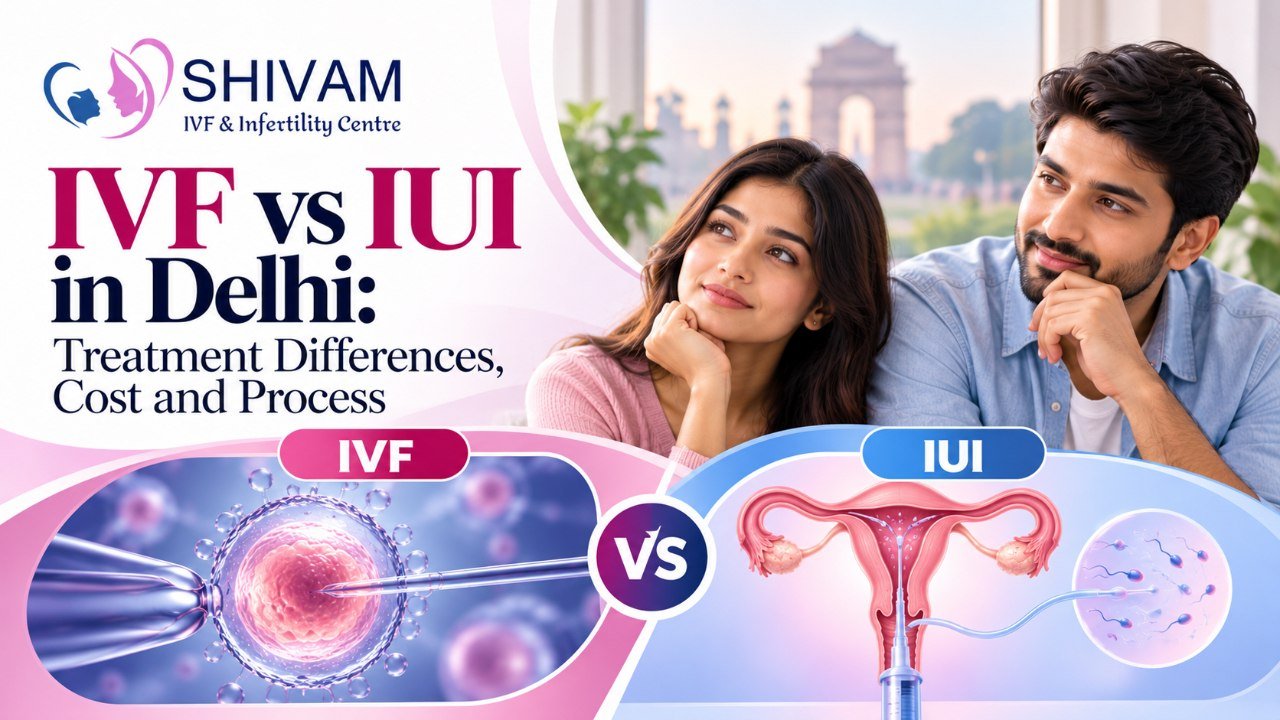
The journey towards parenthood doesn't always follow the plan. For some couples, pregnancy happens naturally. For others, months of trying turn into years of questions, medical appointments, and quiet disappointment. It's difficult. And when a doctor mentions fertility treatments such as IVF and IUI, the confusion can become even greater.
Which treatment should you choose? Is IVF always more effective? Can IUI work if you've been trying to conceive for a long time?
Look, there's no single answer for every couple. Understanding the differences between these treatments is a good place to start, especially when looking for an experienced fertility specialist or an IVF Hospital in Delhi.
What Is the Difference Between IVF and IUI?
Both treatments aim to help couples conceive, but they work differently.
IUI: A Simpler Approach to Conception
Intrauterine Insemination (IUI) is a fertility treatment in which prepared sperm is placed directly into the uterus around the time of ovulation. The procedure helps sperm get closer to the egg, allowing fertilisation to occur naturally inside the body.
It's relatively simple. It usually takes little time. And it doesn't require egg retrieval or fertilisation in a laboratory.
Doctors may recommend IUI for couples experiencing unexplained infertility, mild male-factor infertility, or certain ovulation-related difficulties. However, its suitability depends on factors such as sperm quality, the woman's age, and whether at least one fallopian tube is open.
IVF: Fertilisation Outside the Body
In Vitro Fertilisation (IVF) involves a more detailed treatment process. The ovaries are stimulated with medication to produce eggs, which are collected and fertilised with sperm in a laboratory. Once an embryo develops, a selected embryo can be transferred into the uterus.
IVF may be recommended when the fallopian tubes are blocked, sperm-related problems are more significant, other fertility treatments haven't worked, or the clinical circumstances favour a more advanced approach.
Here's the important distinction: IUI helps sperm reach the egg, while IVF brings the egg and sperm together in a laboratory. Neither treatment guarantees pregnancy, and the right option depends on the couple's individual fertility assessment.
IVF vs IUI: Process and Treatment Duration
The experience differs from one treatment to another.
An IUI cycle generally involves monitoring ovulation, sometimes using medication to stimulate egg development, preparing the sperm sample, and placing it into the uterus using a thin catheter. The procedure itself usually takes only a few minutes. A pregnancy test is typically performed around two weeks later.
IVF requires more steps. Hormonal injections stimulate the ovaries, ultrasound scans and blood tests track egg development, and eggs are collected under medical supervision. After fertilisation in the laboratory, an embryo is selected for transfer. Some patients may require frozen embryo transfer in a later cycle.
An IVF cycle commonly takes several weeks, although the overall timeline depends on the treatment protocol, embryo development, and whether additional procedures are needed.
IVF and IUI Cost in Delhi
Cost matters. Fertility treatment can affect a family's finances, and knowing what to expect helps couples plan without unnecessary stress.
IUI is generally more affordable because it involves fewer procedures and doesn't require egg retrieval or laboratory fertilisation.
IVF is usually more expensive. A basic IVF cycle may cost around ?1,00,000–?2,50,000 or more, depending on the centre, medicines, laboratory procedures, and individual treatment needs. ICSI, embryo freezing, frozen embryo transfer, and other additional services may increase the total.
These figures are indicative estimates, not fixed prices. Ask the clinic for a written treatment estimate that explains what's included and which additional expenses might arise.
Choosing the Right Fertility Specialist in Delhi
The lowest price doesn't always mean the best choice. Neither does choosing the most advanced treatment automatically improve your chances.
A careful fertility evaluation should come first. Your doctor may review your medical history, ovarian reserve, ovulation patterns, fallopian tube health, and your partner's semen analysis before recommending a treatment plan.
At Shivam IVF, couples can explore fertility care and discuss suitable treatment options based on their individual circumstances. Consulting Dr Bhavana Mittal can help patients understand the available approaches, the investigations they may need, and the practical differences between IUI and IVF.
When comparing an IVF Hospital in Delhi, look at the fertility specialist's qualifications, the clinic's laboratory facilities, transparency about costs, counselling support, and how clearly the team explains treatment expectations.
So, Should You Choose IVF or IUI?
Start with the facts, not fear.
IUI may be a reasonable first step for selected couples with favourable fertility findings. IVF may offer a more appropriate approach when there are significant fertility challenges or when other treatments have failed.
Age matters. The cause of infertility matters. And the time you've already spent trying to conceive matters, too.
The best next step is a personalised consultation at Shivam IVF with Dr Bhavana Mittal to understand which treatment suits your situation. Ask questions, discuss realistic success rates for your age and diagnosis, and make sure you understand the costs before beginning.
Because fertility treatment isn't about choosing the procedure with the biggest name. It's about choosing the right medical approach for your journey towards parenthood.