
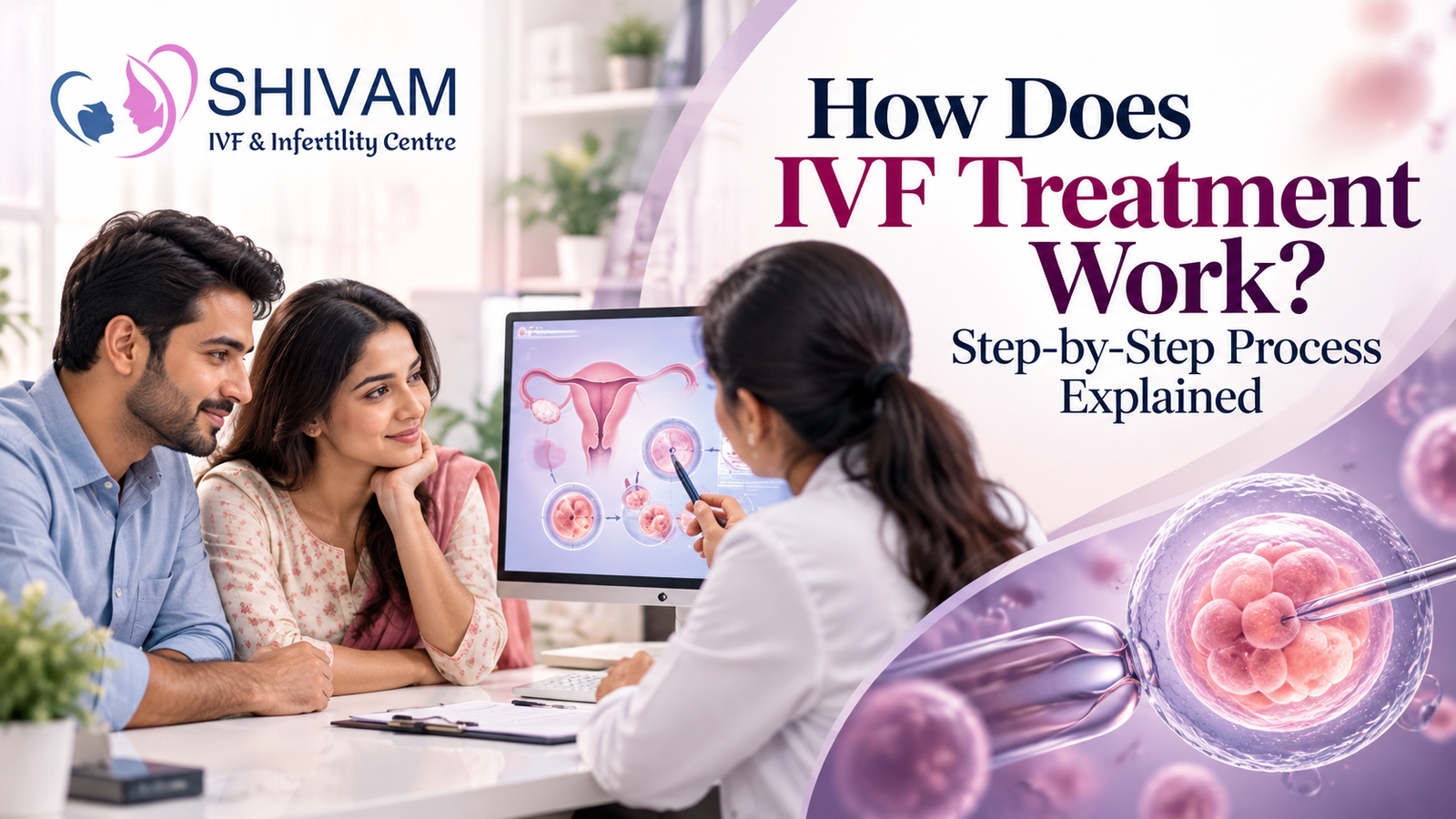
IVF can sound complicated. Hormones, injections, eggs, embryos, transfers — suddenly, there are a lot of medical terms to keep track of.
But the basic idea is surprisingly straightforward.
IVF, or In Vitro Fertilisation, helps fertilisation happen outside the body in a carefully controlled laboratory environment. The resulting embryo is then transferred into the uterus, where doctors hope it will implant and develop into a pregnancy.
So, what actually happens during IVF?
Let’s break it down.
Step 1: Initial Consultation and Fertility Assessment
Every IVF journey starts with understanding the couple's specific fertility situation. There isn't one standard IVF plan that works identically for everyone.
The doctor may review medical history, previous pregnancy attempts, menstrual patterns and earlier fertility treatments. Tests such as hormone evaluations, ultrasound scans, semen analysis and ovarian reserve assessment may also be recommended.
At Shivam IVF, this evaluation helps doctors decide which treatment approach makes sense rather than simply jumping straight into IVF.
Step 2: Ovarian Stimulation
Normally, the ovaries release one mature egg during a menstrual cycle. IVF needs more than one opportunity.
That's where stimulation comes in.
The woman is given prescribed fertility medicines that encourage the ovaries to develop multiple follicles. During this phase, regular ultrasound scans and sometimes blood tests help the medical team monitor follicle growth and hormone levels.
It's a bit like watching several seedlings grow instead of waiting for just one plant to appear.
Step 3: Egg Retrieval
Once the follicles reach the appropriate stage of development, the doctor plans egg retrieval.
A specialised procedure is performed to collect mature eggs from the ovaries, generally using ultrasound guidance and sedation or anaesthesia as appropriate. The timing matters because the eggs need to be retrieved at the right stage.
Small details can make a big difference here.
Step 4: Fertilisation in the Laboratory
The collected eggs are then taken to the embryology laboratory.
Sperm from the male partner or a suitable donor source, depending on the treatment plan, is prepared and used for fertilisation. In conventional IVF, sperm and eggs are placed together under controlled laboratory conditions. In some cases, ICSI may be recommended, where a single sperm is injected directly into an egg.
The goal is simple: create embryos that can continue developing.
Step 5: Embryo Development
Fertilisation isn't the finish line.
The embryos are carefully observed as they develop in the laboratory over the following days. Embryologists assess their development and quality before the medical team decides which embryo or embryos are appropriate for transfer.
This stage requires patience. There isn't a shortcut around biology.
Step 6: Embryo Transfer
The selected embryo is transferred into the uterus using a thin catheter. It is generally a relatively quick procedure and usually doesn't require surgery.
After transfer, the focus shifts from creating an embryo to supporting the possibility of implantation and pregnancy.
And yes, the waiting can feel longer than the entire treatment.
Step 7: Pregnancy Test and Follow-Up
After the recommended waiting period, a blood test is performed to check for pregnancy.
If the result is positive, follow-up appointments and scans help monitor the pregnancy in its early stages. If the cycle doesn't succeed, the doctor can review what happened and discuss possible next steps.
Choosing the Right IVF Team Matters
IVF isn't simply a laboratory procedure. It involves decisions at every stage — stimulation, monitoring, egg retrieval, fertilisation, embryo development and transfer.
For couples considering treatment, choosing an experienced fertility team can make the process easier to understand and manage. At Shivam IVF, Dr Bhavana Mittal works with patients undergoing fertility evaluation and assisted reproductive treatment, with treatment planning based on individual circumstances.
If you're looking for the Best IVF Centre in Delhi, don't judge a clinic only by equipment or success-rate claims. Look at the complete picture: medical expertise, laboratory support, counselling, transparency and how carefully your treatment is personalised.
Because IVF isn't just about getting through a procedure.
It's about giving every carefully planned step the attention it deserves.