
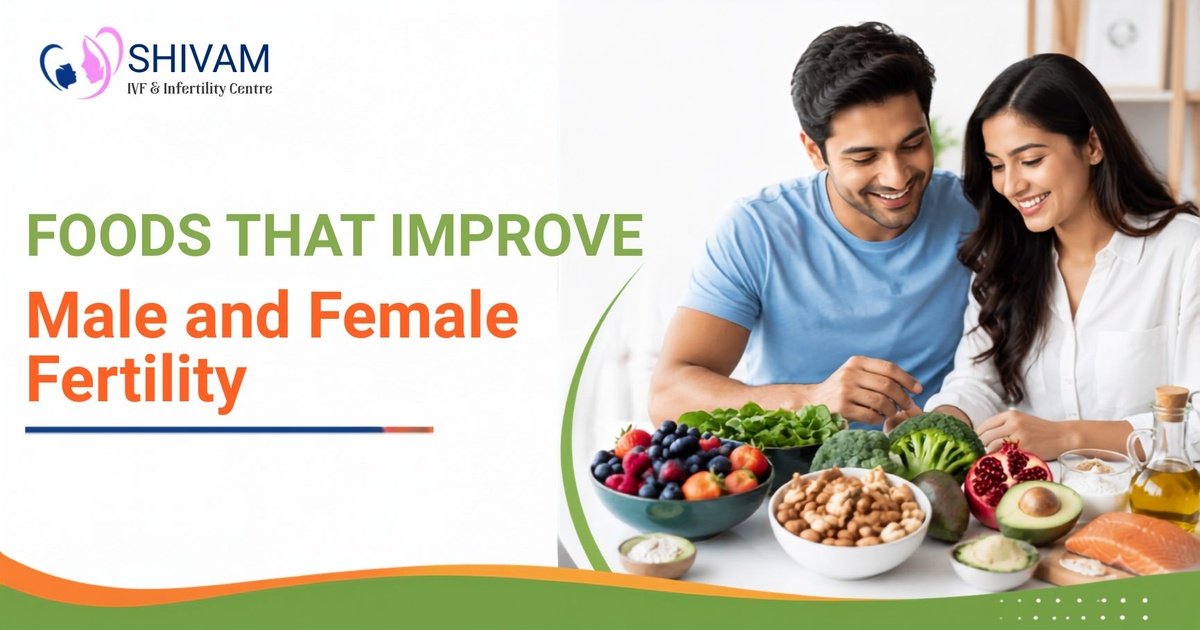
Trying to conceive can make food feel strangely important. Suddenly, every meal raises a question: Is this helping? Is that hurting? Should we be eating something different?
The truth is less dramatic, but more useful. No single food can guarantee pregnancy, and fertility doesn't work like a switch that flips after eating a bowl of berries. What you eat regularly, however, can support overall reproductive health, hormone function, healthy body weight, and the nutrients your body needs before conception.
At Shivam IVF, fertility care takes a broader view of reproductive health, and nutrition can be one sensible part of that picture.
Foods That May Support Female Fertility
A woman's reproductive health is influenced by several factors, including age, ovulation, hormonal health, metabolic health and underlying medical conditions. A nutritious diet can't turn back the biological clock, but it can help create healthier conditions for conception.
Start with colourful vegetables.
Spinach, broccoli, carrots, capsicum and other vegetables provide folate, antioxidants, fibre and a range of micronutrients. Leafy greens deserve particular attention because folate is important before and during early pregnancy.
Then there are fruits. Berries, oranges, guava, apples and pomegranates can add vitamin C, fibre and antioxidant-rich compounds to the plate. You don't need an exotic "fertility fruit". The humble guava sitting in the local market can be perfectly useful.
Protein matters too. Eggs, lentils, beans, paneer, yoghurt, fish and other suitable protein sources can help build a balanced diet. Healthy fats from nuts, seeds, avocados and certain cooking oils can also form part of a fertility-friendly eating pattern.
And don't forget whole grains. Oats, brown rice, whole-wheat roti and millets generally provide more fibre and nutrients than highly refined grains.
Foods That May Support Male Fertility
Fertility isn't only a woman's conversation. Sperm health matters, and nutrition can play a supporting role in maintaining normal reproductive function.
Nuts and seeds are an easy addition. Walnuts, almonds, pumpkin seeds and sunflower seeds provide healthy fats, minerals and antioxidants. A small handful is enough; fertility doesn't improve because someone suddenly starts eating an entire packet of almonds every afternoon.
Fish such as salmon, sardines and other oily fish can provide omega-3 fatty acids. Eggs provide protein and several micronutrients. Citrus fruits, tomatoes, berries and colourful vegetables contribute antioxidants that help the body manage oxidative stress.
Zinc-containing foods, including dairy products, legumes, seeds and certain meats, may also be useful as part of a balanced diet.
Simple food. Consistent habits.
That's the real trick.
What Should You Limit?
This part gets overlooked.
A fertility-supportive diet isn't just about adding "superfoods". It's also about not allowing heavily processed foods, excessive sugary drinks, frequent fried foods and excessive alcohol to dominate the menu.
Smoking deserves an even bigger red flag because it can negatively affect reproductive health in both men and women.
Crash diets aren't a clever shortcut either. Severe calorie restriction or rapid weight changes can interfere with normal hormonal function, while excess body weight may also affect fertility in some people. Balance wins here.
When Diet Isn't Enough
Here's where expectations need to stay realistic.
If pregnancy isn't happening despite regular attempts, changing breakfast alone isn't the answer. Fertility problems can involve ovulation, fallopian tubes, sperm quality, endometriosis, hormonal conditions, age-related changes and other factors — sometimes there isn't one obvious reason at all.
This is where professional evaluation becomes important.
At Shivam IVF, Dr Bhavana Mittal approaches fertility care with the understanding that every couple can have a different story. Depending on the situation, evaluation may include both partners rather than placing the entire focus on the woman.
That matters.
Because fertility is a two-person equation.
Building a Fertility-Friendly Plate
Think less about miracle foods and more about patterns. Fill your plate with vegetables and fruits, include quality protein, choose whole grains where suitable, add nuts or seeds, stay adequately hydrated and keep highly processed foods occasional rather than routine.
And if you're planning pregnancy, don't wait until the last minute to think about nutrition and reproductive health.
Food can support the body.
It can't replace fertility treatment when treatment is needed.
If you're looking for the Best IVF Centre in Delhi NCR, a personalised consultation can help determine what is actually affecting your fertility instead of relying on internet lists of "ten foods that guarantee pregnancy" — because, frankly, fertility deserves better than that.