
Some women know something is wrong for years.
The pain comes every month.
Periods become difficult to manage.
And sometimes, pregnancy just doesn’t happen.
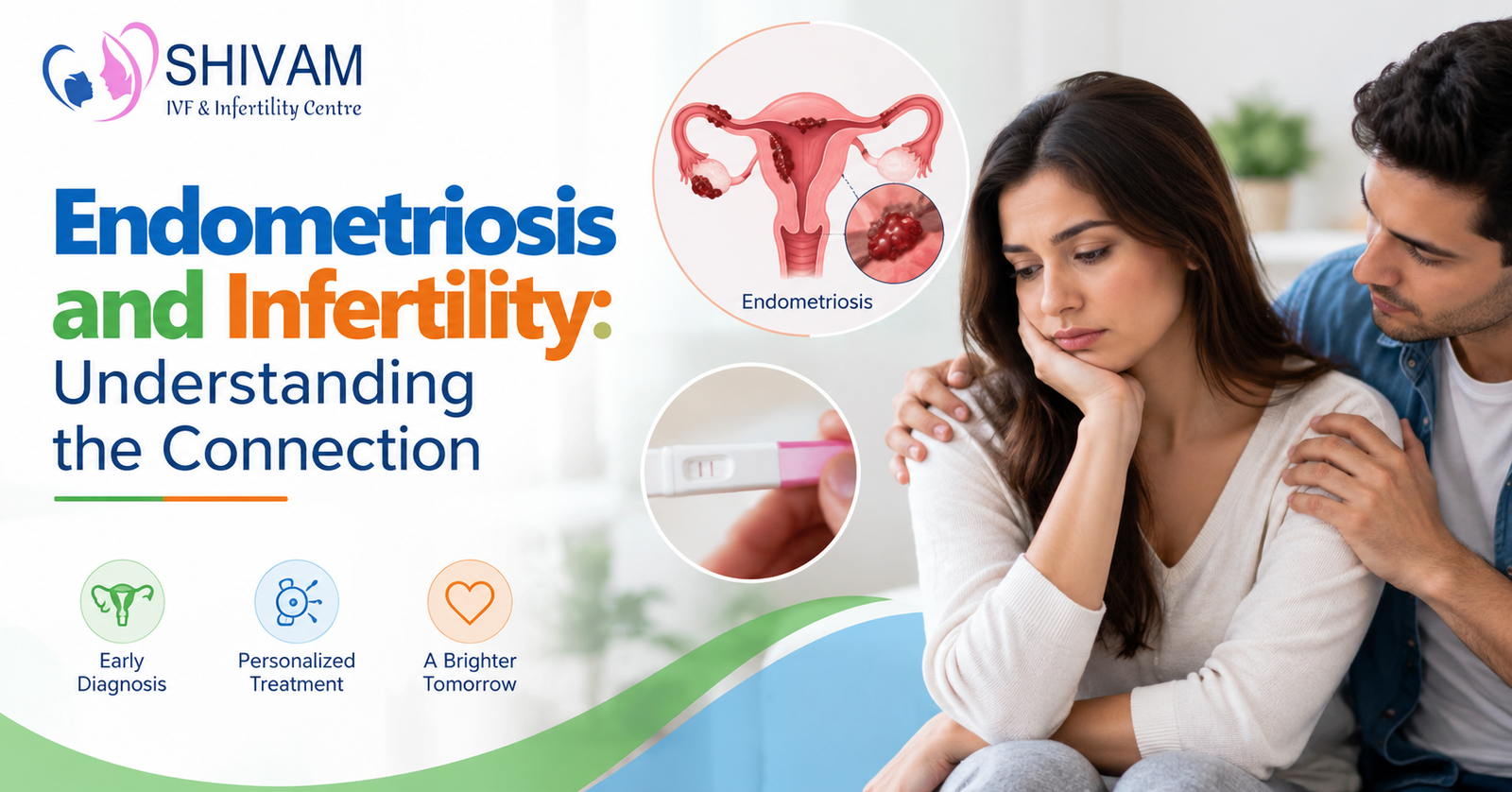
One possible reason is endometriosis—a condition in which tissue similar to the lining of the uterus grows outside the uterus, often around the ovaries, fallopian tubes, and pelvic tissues. It can cause painful periods, pelvic discomfort and, in some women, difficulty conceiving.
But endometriosis and infertility aren't automatically the same thing.
That distinction matters.
How Can Endometriosis Affect Fertility?
Think of conception as a journey with several checkpoints. The ovary needs to release an egg, the fallopian tube needs to pick it up, sperm needs to reach it, fertilisation needs to occur, and the resulting embryo must eventually reach the uterus and implant.
Endometriosis can interfere with several parts of this process.
Inflammation may affect the pelvic environment. Adhesions or scar tissue can sometimes distort the normal anatomy around the ovaries and fallopian tubes. Endometriosis involving the ovaries may also affect ovarian function in certain cases.
And then there is the less obvious part.
Pain.
Severe pelvic pain can affect intimacy and timing during the fertile window. When every month becomes a calculation around discomfort, trying to conceive can stop feeling like a hopeful process and start feeling like another medical appointment.
That isn't something women should simply "put up with."
Does Having Endometriosis Mean You Can't Get Pregnant?
No.
This is where fear often gets ahead of the facts.
Many women with endometriosis do conceive naturally, while others may need medical assistance depending on their age, ovarian reserve, tubal status, severity of endometriosis, sperm factors, and how long they've been trying.
There isn't one universal fertility plan for every woman with endometriosis.
A woman in her late twenties with mild disease and open tubes may have very different options from someone in her late thirties with ovarian endometriosis and reduced ovarian reserve. The diagnosis may be the same on paper. The fertility strategy shouldn't be.
This is why an individual assessment matters.
When Should You See a Fertility Specialist?
If you've been trying to conceive without success—or if you already have a diagnosis of endometriosis—it can be useful to discuss fertility sooner rather than simply waiting and hoping.
A fertility specialist may evaluate factors such as ovulation, ovarian reserve, fallopian tube condition and the male partner's sperm parameters. Your age and previous treatments also matter.
At Shivam IVF, the approach to infertility involves looking beyond a single diagnosis and understanding the couple's overall reproductive picture.
Dr Bhavana Mittal, a fertility specialist associated with Shivam IVF, focuses on infertility and reproductive medicine, including assisted reproductive techniques such as IVF and ICSI.
And sometimes, the biggest relief isn't immediately starting treatment.
It's finally understanding what is happening.
Where Does IVF Fit In?
For some women with endometriosis-related infertility, IVF treatment may become an option when natural conception or simpler fertility treatments aren't successful or aren't considered suitable.
During IVF, eggs are retrieved from the ovaries and fertilised with sperm in a laboratory. The resulting embryo can then be transferred into the uterus.
It sounds straightforward when written in one sentence.
The decision behind it isn't.
Doctors need to consider ovarian reserve, previous surgery, endometriosis severity, age, previous fertility treatment and other factors before recommending the appropriate route. In some cases, surgery may be considered; in others, moving directly toward assisted reproduction may make more sense.
That's precisely why choosing a fertility specialist shouldn't be reduced to finding the nearest clinic.
Finding the Right Fertility Care
Endometriosis can be frustrating because the symptoms aren't always proportional to the fertility impact. Someone may have significant pain but relatively preserved fertility, while another woman may have fewer symptoms yet face reproductive challenges.
There are no useful shortcuts here.
If you're looking for IVF Treatment in Delhi, speak with a qualified fertility specialist who can assess your individual circumstances rather than treating the diagnosis in isolation.
At Shivam IVF, Dr Bhavana Mittal and the fertility team can help patients understand their options—from fertility evaluation to assisted reproductive treatments—so decisions are based on medical findings rather than anxiety or assumptions.
Endometriosis doesn't automatically close the door to motherhood.
Sometimes, it simply means the route needs a little more planning.
And knowing that can change everything.