
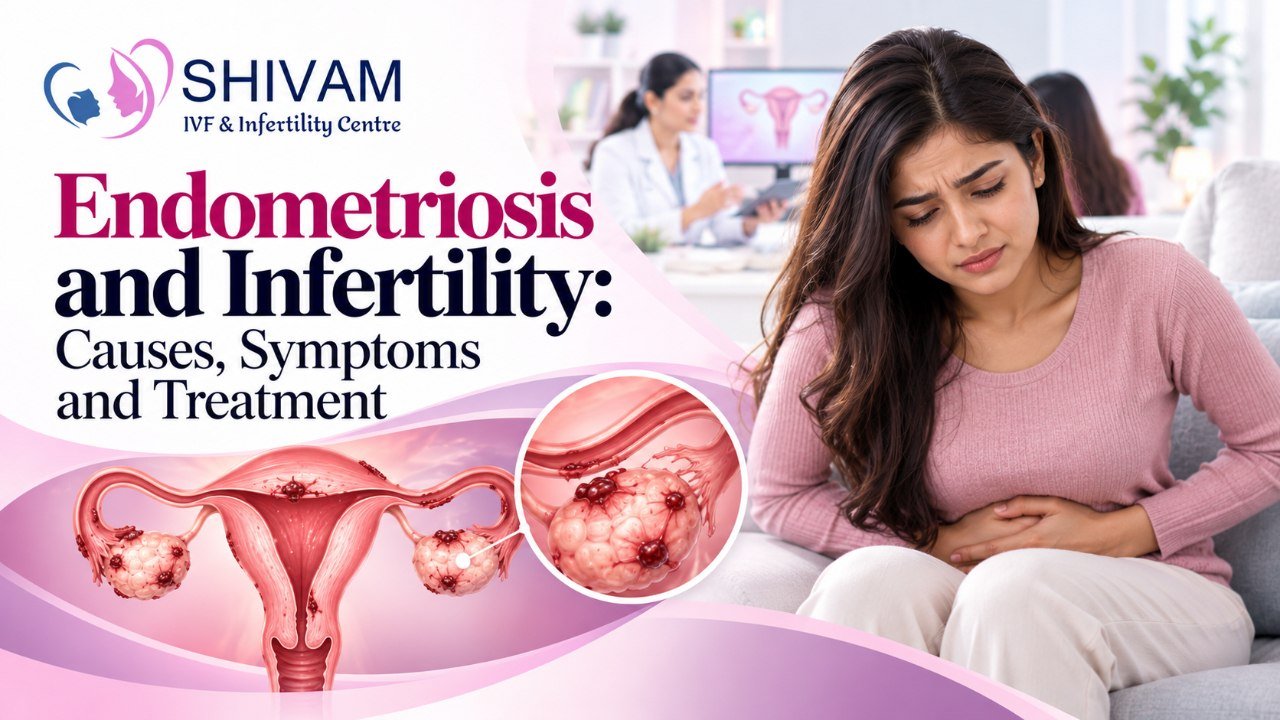
Some health problems announce themselves loudly. Others stay hidden for years. Endometriosis often belongs to the second category, causing painful periods, persistent pelvic discomfort and, for some women, difficulties getting pregnant. The frustrating part? Many women dismiss these symptoms as a normal part of menstruation, not realising that something deeper may be happening.
Endometriosis and infertility are closely linked, although having endometriosis doesn't automatically mean a woman cannot conceive. With timely diagnosis, appropriate treatment and guidance from an experienced fertility specialist, many women can explore options that suit their individual circumstances.
At Shivam IVF, understanding the cause of infertility is an important step towards helping couples make informed decisions about their fertility journey.
What Is Endometriosis?
Endometriosis is a condition in which tissue similar to the lining of the uterus grows outside the uterus, commonly affecting the ovaries, fallopian tubes and surrounding pelvic tissues. This tissue responds to hormonal changes during the menstrual cycle, potentially triggering inflammation, pain and scar tissue formation.
Imagine dealing with period cramps so severe that a routine workday becomes difficult, month after month. For some women, that's the reality of endometriosis. Others experience mild symptoms or none at all, making the condition harder to identify.
When the disease affects the reproductive organs, it may interfere with the natural process of conception.
How Does Endometriosis Cause Infertility?
The connection between endometriosis and infertility isn't always straightforward. Several factors can contribute to difficulties conceiving.
- Damage to the fallopian tubes: Scar tissue and adhesions may restrict the movement of the egg or interfere with the meeting of the egg and sperm.
- Ovarian endometriosis: Endometriomas, sometimes called chocolate cysts, can affect the ovaries. The condition itself, along with certain surgical treatments, may reduce ovarian reserve.
- Inflammation in the pelvis: Inflammatory changes may interfere with the environment needed for fertilisation and early embryo development.
- Altered reproductive anatomy: Adhesions can affect the normal position and function of the ovaries and fallopian tubes.
- Reduced fertility potential: Some women with endometriosis experience difficulties with fertilisation or implantation, although the exact mechanisms vary and aren't fully understood.
Here's the important distinction: endometriosis doesn't affect every woman in the same way. Age, disease severity, ovarian reserve and other fertility factors all influence the chances of pregnancy.
Common Symptoms of Endometriosis
Painful periods aren't the only warning sign. Watch for symptoms such as:
- Severe menstrual cramps that disrupt everyday activities.
- Persistent pelvic or lower abdominal pain.
- Pain during or after sexual intercourse.
- Discomfort while passing urine or stools, particularly during menstruation.
- Heavy or irregular menstrual bleeding.
- Difficulty conceiving despite regular attempts.
- Fatigue, bloating or digestive discomfort around periods.
Some women experience several symptoms, while others have very few. If period pain repeatedly forces you to cancel plans, miss work or rely heavily on painkillers, don't simply accept it as normal. A gynaecological assessment can help identify the cause.
Treatment Options for Endometriosis-Related Infertility
Treatment depends on the woman's symptoms, age, ovarian reserve, fertility goals and the extent of the disease. There isn't one solution that works for everyone.
1. Medication and symptom management
Pain-relieving medicines and hormonal treatments may help control endometriosis symptoms. However, hormonal suppression generally prevents conception while being used and doesn't necessarily improve natural fertility after treatment stops. A specialist can explain which options are appropriate when pregnancy is the immediate goal.
2. Laparoscopic surgery
In selected cases, laparoscopic surgery may remove endometriosis lesions, release adhesions or address endometriomas. Surgery can improve pelvic anatomy, but it also carries risks, including damage to ovarian tissue. The potential benefits and risks should be carefully assessed before proceeding.
3. Intrauterine insemination (IUI)
IUI may be considered for selected women with milder endometriosis, suitable fallopian tube function and other favourable fertility factors. Its suitability depends on the individual diagnosis.
4. In vitro fertilisation (IVF)
IVF may be recommended when endometriosis significantly affects fertility, the fallopian tubes are damaged, other fertility factors are present or previous treatments haven't succeeded. The procedure involves stimulating the ovaries, retrieving eggs, fertilising them in a laboratory and transferring an embryo into the uterus.
An individual assessment helps determine whether IVF, surgery or another approach offers the most appropriate path forward.
When Should You Consult an IVF Specialist in Delhi?
If you've been trying to conceive without success, or you're experiencing severe menstrual pain alongside fertility concerns, seeking medical advice sooner rather than later can help clarify your options. Women under 35 are generally advised to seek an infertility evaluation after 12 months of trying, while women aged 35 or older should usually seek evaluation after six months. Earlier assessment may be appropriate when endometriosis or another known fertility concern is present.
Dr Bhavana Mittal, associated with Shivam IVF, provides fertility expertise for individuals and couples exploring treatment options. Consulting an experienced IVF Specialist in Delhi can help you understand your diagnosis, review relevant investigations and develop a treatment plan based on your reproductive health and pregnancy goals.
Take the Next Step Towards Parenthood
Endometriosis can make the journey to pregnancy more complicated. It doesn't necessarily close the door to parenthood.
At Shivam IVF, women experiencing fertility concerns can seek guidance on available treatment approaches, from fertility evaluation to assisted reproductive techniques. The right plan begins with understanding your condition rather than rushing into a particular procedure.
Don't ignore persistent pain. Don't lose valuable time to uncertainty. Speak with a qualified fertility specialist, ask questions and explore your options with confidence. With an informed approach and appropriate care, you can take meaningful steps towards your goal of building a family.