
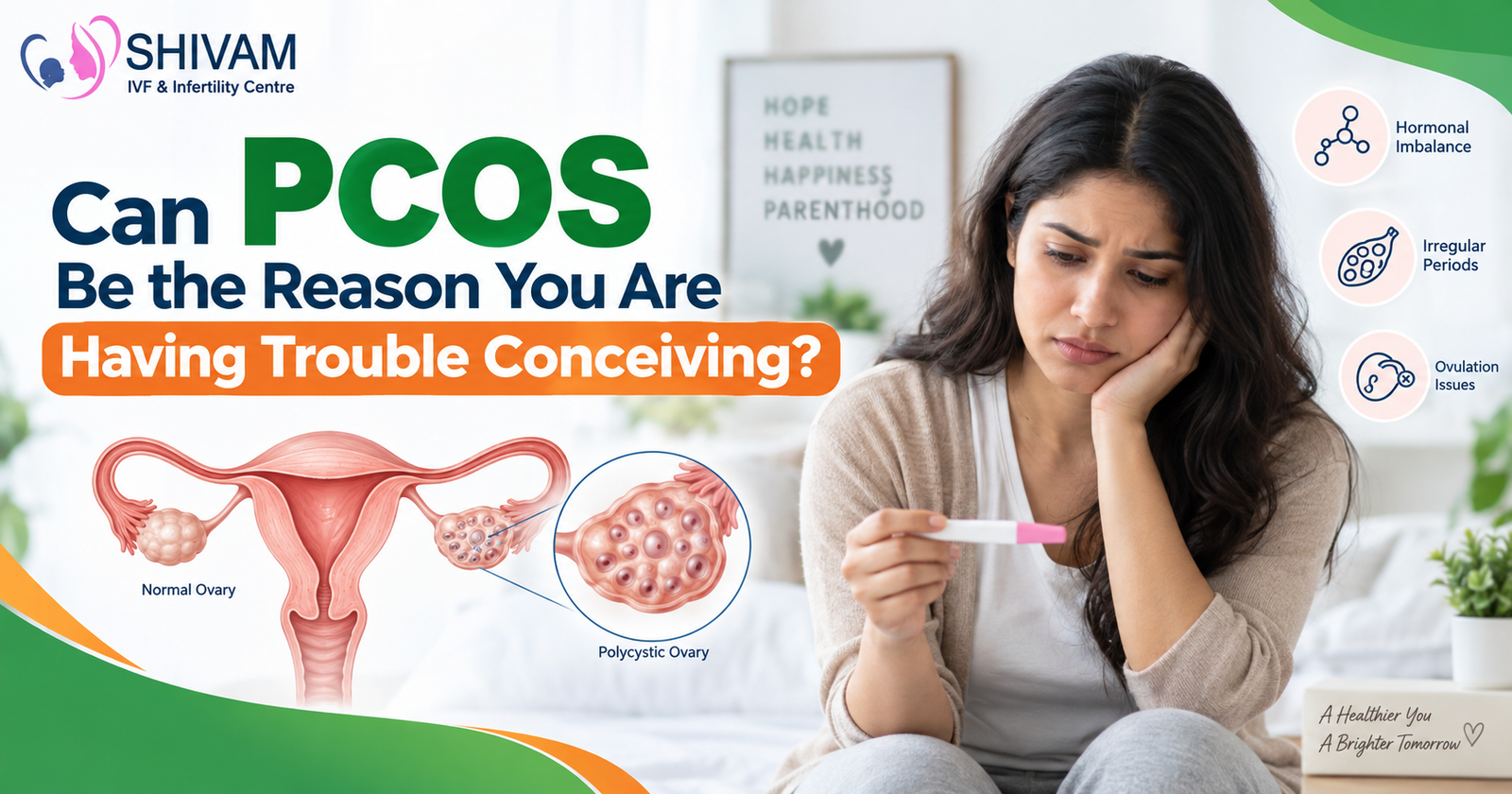
You’ve been trying. Month after month. Still, nothing.
And then someone mentions PCOS.
Could that really be the reason you’re having trouble conceiving?
Yes, it can be. But PCOS doesn’t mean you can’t become a mother. Not at all.
Polycystic Ovary Syndrome (PCOS) is one of the common hormonal conditions that can affect ovulation and, as a result, make conception more difficult for some women. The frustrating part is that PCOS doesn’t look the same in everyone. One woman may have irregular periods, another may ovulate less frequently, while someone else may have relatively regular cycles but still experience fertility challenges.
That’s why simply hearing the words “you have PCOS” isn’t the end of the story.
How Does PCOS Affect Fertility?
Let’s keep it simple.
Pregnancy requires an egg to mature and be released from the ovary — a process called ovulation. With PCOS, hormonal imbalances can interfere with this process. Sometimes the follicle doesn't release an egg properly, and sometimes ovulation happens much less often than expected.
No ovulation means no egg available for fertilisation.
And if ovulation happens unpredictably, figuring out the fertile window can become a guessing game.
PCOS may also be associated with insulin resistance and higher androgen levels, which can further disturb normal reproductive hormone patterns. This doesn't mean every woman with PCOS will have infertility. Far from it.
It means the road may need a little more planning.
Can You Still Get Pregnant With PCOS?
Absolutely.
Many women with PCOS conceive naturally, while others may need medical support to regulate ovulation. Treatment depends on factors such as age, menstrual pattern, ovarian function, sperm health, weight, medical history, and how long you’ve been trying to conceive.
There isn't one magic treatment.
A gynaecologist may first focus on lifestyle changes and cycle monitoring. Depending on the situation, medications that help induce ovulation may be considered. For some couples, treatments such as IUI or IVF may become options if simpler approaches haven't worked or if additional fertility factors are present.
This is where proper evaluation matters.
When Should You See a Doctor?
If your periods are very irregular, you rarely seem to ovulate, or you’ve been trying to conceive without success, don't spend another year blaming yourself or endlessly tracking every tiny symptom on an app.
Get evaluated.
A consultation with an experienced fertility specialist can help identify whether PCOS is actually affecting ovulation — and whether something else, such as blocked fallopian tubes or male-factor infertility, is also involved.
At Shivam IVF, fertility evaluation and treatment can be planned according to the individual needs of the couple. Dr Bhavana Mittal brings experience in reproductive medicine and infertility management, helping patients understand their options rather than treating every case with the same checklist.
For women looking for a Best Gynaecology Centre in Delhi, the important thing isn't simply finding a clinic with a long list of treatments. It’s finding care where your symptoms, fertility goals, and medical history are actually listened to. PCOS can make conception harder. It doesn't have to make motherhood impossible.