
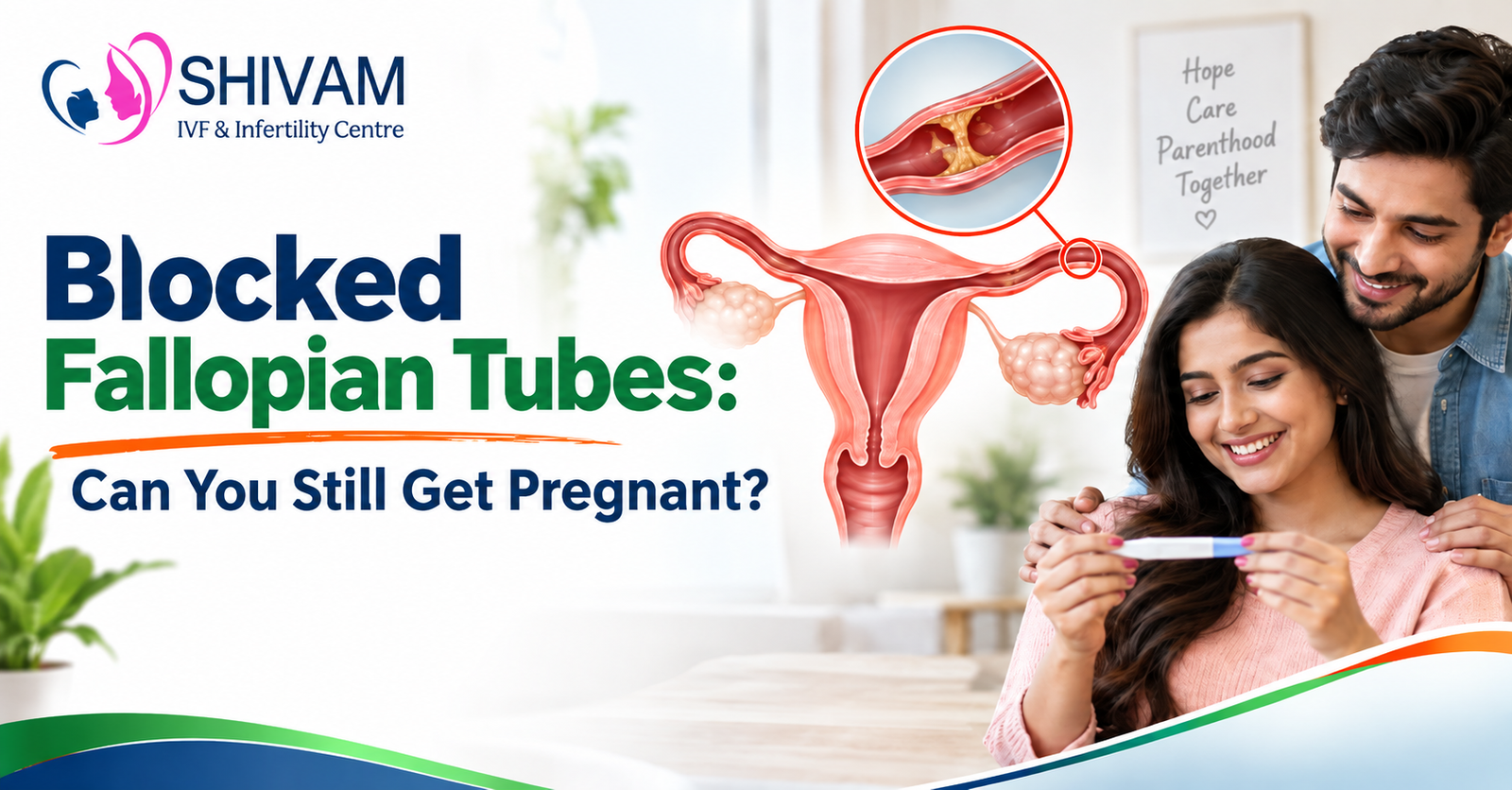
A blocked fallopian tube can sound frightening when you’re trying to conceive.
But it doesn't automatically mean pregnancy is impossible.
Not even close.
The real question is: Are one or both tubes blocked, where is the blockage, and what is the condition of the rest of your reproductive system?
Fallopian tubes are tiny passageways, but they play a surprisingly important role in natural conception. After ovulation, the egg travels into the fallopian tube, where it may meet sperm and become fertilised. The early embryo then moves towards the uterus. So, if both tubes are completely blocked, the usual meeting point for egg and sperm is effectively closed.
That doesn't mean the journey has to end there.
What happens if only one fallopian tube is blocked?
If one tube is healthy and functioning normally, natural pregnancy may still happen. An egg released from an ovary can potentially be picked up by the open tube, although the chances depend on several factors—including ovulation, sperm health, age and the condition of the reproductive organs.
Think of it like having two roads leading to the same destination. One road being closed makes the journey less predictable, but it doesn't necessarily make the destination unreachable.
A complete blockage of both tubes is different.
In that situation, IVF can offer a way around the blocked tubes because fertilisation takes place outside the body in the laboratory. The resulting embryo is then transferred directly into the uterus—so the fallopian tubes don't need to provide the route.
Why do fallopian tubes become blocked?
There isn't always one obvious culprit.
Pelvic infections, previous pelvic or abdominal surgery, endometriosis and pelvic inflammatory disease can cause scarring around or inside the tubes. Sometimes the damage is old—something that happened years ago may only come to light when a couple begins investigating infertility.
And that's often the frustrating part.
You can feel completely healthy and still have a tubal blockage.
Tests such as an HSG (hysterosalpingography), HyCoSy, or, in selected cases, laparoscopy may be used to assess whether the tubes are open. The right test depends on the individual situation, which is why an infertility evaluation shouldn't be reduced to a single scan or report.
Can IVF help with blocked fallopian tubes?
Yes. In fact, tubal blockage is one of the situations where IVF Treatment in Delhi may be considered because IVF bypasses the tubes altogether.
The eggs are retrieved from the ovaries, fertilised with sperm in the laboratory, and an embryo is subsequently placed inside the uterus. The blocked tube doesn't have to transport the egg or embryo.
That's the clever part.
At Shivam IVF, fertility care is approached with the larger picture in mind rather than treating a test report in isolation. Dr Bhavana Mittal, a fertility specialist associated with the centre, evaluates factors such as age, ovarian reserve, ovulation, sperm parameters, previous pregnancy history and the nature of the tubal problem before recommending a treatment pathway.
Because IVF isn't automatically the answer for every woman with a blocked tube.
Sometimes one open tube, good ovulation and otherwise favourable fertility factors may allow a different approach. In other cases—particularly when both tubes are completely blocked—IVF may make considerably more sense.
Don't let the word “blocked” decide your future
A fallopian tube report can look very black-and-white on paper. Fertility rarely is.
One blocked tube isn't the same as two. A partial blockage isn't the same as a complete blockage. And a tubal problem doesn't tell you everything about your ability to become a parent.
What matters is understanding why the tubes are blocked, whether they can be treated, and which fertility option gives you the most sensible chance of pregnancy.
If you're facing tubal blockage and feeling overwhelmed by what comes next, a consultation with a fertility specialist can turn a confusing report into an actual plan.
At Shivam IVF, Dr Bhavana Mittal and the fertility team can assess your individual circumstances and discuss whether natural conception, fertility treatment or IVF is the more appropriate route.
Sometimes the road is blocked.
You simply need a different route.